notes
Notes on Animal Health, December 2025: A Natural History of Pets

Cindy Cole, DVM, PhD, DACVCP
December 11, 2025
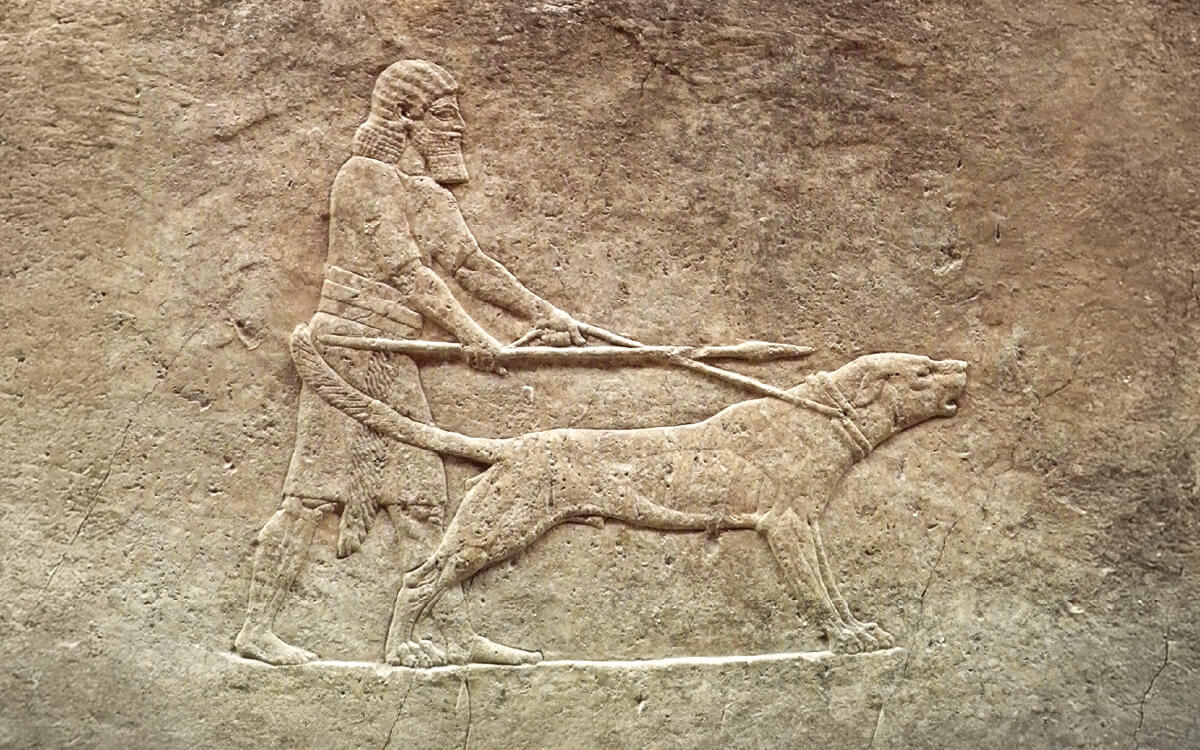
Although we may not give much thought to it, the presence of dogs and cats in our lives is a fascinating tale of evolution that began tens of thousands of years ago. The dog (Canis lupus familiaris) was likely the first animal to be domesticated, well before cattle, pigs, horses or cats. The process began during the Pleistocene Ice Age between 15,000 and 40,000 years ago on the Eurasian continent.
There is evidence that domestication of dogs occurred not once, but multiple times from geographically separated wolf (Canis lupus) populations on opposite sides of Eurasia. How and why groups of late Pleistocene hunter-gatherers would domesticate a large and potentially dangerous carnivore is the subject of debate. The commensal scavenger hypothesis holds that wolves were first attracted to waste discarded by hunter-gatherers. At some point, humans likely recognized some benefits from living with resident, semi-domestic wolves, perhaps using them as guards or hunting partners. Bolder or friendlier wolves perhaps received better treatment, including more food, which gave them a reproductive advantage. Eventually, the process would create a wolf population divergent from their ancestral one, as they adapted to the new scavenging niche.
By contrast, the pet keeping or cross-species adoption hypothesis postulates that Paleolithic peoples captured, adopted and reared wolf pups, and that this practice, overtime, selected for individuals less fearful of and more cooperative with humans. This latter theory draws heavily on anthropological observations of petkeeping among recent hunter-gatherers.
While it is impossible to know exactly how the domestic dog evolved from the ancient wolf, an experiment by Russian geneticist Dmitri Belyaev provides insights into the process of domestication. The study began in 1959, when Belyaev took a population of silver foxes, a melanistic variant of the red fox (Vulpes vulpes), and over a span of 60 years selectively bred them for friendliness and docility. Along with their temperament, Belyaev and his collaborators documented phenotypic changes in the foxes that closely resembled those produced by canine domestication, including floppy ears, curly tails, and shorter, rounder, more dog-like snouts. In addition, there was a drastic reduction in blood cortisol concentrations and less adrenal cortex reactivity in foxes selected for tameness compared to wild-type controls.
As humans began to spread across the globe their dogs spread with them. The continued evolution of dogs was influenced by their environment, as well as human-driven selection pressure. For example, thick heavy coats would be advantageous to dogs living in arctic conditions, while dogs with short coats would survive better in hot desert climes. In addition, humans would preferentially breed individuals possessing desired traits, such as herding or hunting behaviors. These dual processes created some of the oldest dog breeds, sometimes referred to as the ancient breeds, which include the Basenji, Greenland Sled Dog and Tibetan Mastiff.
Determining the origins of pet cats has been difficult due to a lack of ancient DNA and their morphological similarity to wild cat ancestors. The Egyptians had long been credited with domesticating the cat between 3,000 and 4,000 years ago. In 2007, however, a study postulated that cats were domesticated approximately 9,500 years ago in Neolithic Levant, a region in the Middle East associated with some of the oldest known civilizations. That same study proposed that the domestic cat (Felis catus) originated from the African wildcat (Felis lybica lybica).
A more recent study found that the ancestry of the domestic cat is more complex than previously thought. It showed genetic evidence that another subspecies of wild cats, the European wild cat (F. silvestra), also interbred with what eventually became the domestic cat. In addition, by examining mitochondrial DNA from domesticated cats in Europe, DNA which is passed down through the maternal line, they found that there were two separate waves of disbursement of cats throughout the continent. The first occurred approximately 6,400 years ago from Anatolian Europe, followed by a second wave approximately 2,000 years ago from Egypt.
While how and why hunter-gatherers domesticated the wolf is still debated, the domestication of the cat appears more straightforward. Not too surprisingly, most agree it was the cat’s idea, a concept referred to as self-domestication. Early settlements in the Near East were plagued by the presence of the house mouse (Mus musculus domesticus). Archaeologists found remains of the rodent, which originated on the Indian subcontinent, among stores of wild grain from Israel, which date back 10,000 years. These mice would have provided a year-round food source for those felines resourceful enough to hunt them in close proximity to humans.
Over time, natural selection would have favored wildcats more tolerant of living in human-dominated environments. As with dogs, humans would have favored docility, but given that cats present little threat, the selection pressure for this trait was likely minimal. In addition, competition among cats would also have continued to influence their evolution and limit how pliant they became. These semi–domesticated cats were likely left primarily to fend for themselves, so their hunting and scavenging skills remained sharp. Even today, most fully domesticated cats can survive independent of humans, as evidenced by the plethora of feral cats around the world.
Today, domesticated dogs and cats continue to evolve based, in large part, on our selection pressures. For example, while there was a great deal of diversity among the ancient breeds in terms of size, coat density and temperament, many of the dog breeds popular today, such as the French Bulldog and Labrador Retriever were only created in the Victorian era, roughly 1820–1914. We are still fashioning new breeds today. For example, the American Miniature Shepard was derived from the Australian Shepard, and was only recognized as a separate breed by the American Kennel Club in 2015.
In a similar manner, we continue to create new cat breeds. For example, the Serengeti cat, modeled on the beautiful serval (Leptailurus serval) a small wild cat native to Africa, was developed by crossing Bengal and Oriental Shorthair cats. By contrast, the relatively new Somali breed is essentially a long haired version of one of the oldest recognized cat breeds, the Abyssinian.
Dogs and cats have been at our sides for thousands of years. Even today, when we live in incredibly diverse societies from traditional hunter-gatherers to modern urban dwellers, the keeping of pets is ubiquitous. Which is not surprising given the degree to which these relationships are mutually beneficial. While we continue to discover our shared ancient history, they will no doubt remain an integral part of our lives for thousands of years to come.
– Cindy Cole, DVM, PhD, DACVCP
First Five
First Five is our curated list of articles, studies, and publications.
1/ Dogs and our microbiome
One of the many ways pets may have a positive effect on humans is by shaping their owners’ microbiomes. Researchers in Japan found that young teenagers, aged 12 to 14, who lived with dogs were on average less socially withdrawn and behaved less aggressively than the non-dog-owners. When researchers analyzed saliva samples from study participants, they found several species of Streptococcus bacteria were more abundant in adolescents with dogs, compared to non-dog-owners. When those Streptococcus were studied in mouse models of behavior, the treated mice were found to be more empathic and less aggressive than the untreated controls.
2/ Cats and water do mix
Underwater treadmills and swimming pool therapies allow people and animals to exercise while bearing less weight, making it an ideal form of rehabilitation and strength training for individuals with orthopedic problems, such as joint or tendon injuries, neurological conditions and geriatric care. Now, thanks to a new training program, developed by veterinarians at the San Marco Veterinary Clinic and Laboratory in Padua, Italy, cats with injuries and disabilities can also benefit from aquatic rehabilitation. The program uses a slow and measured approach, with lots of rewards and the results of a pilot study of 12 cats yielded extremely promising results.
3/ And More Cats
Judging by the number of cat videos on the internet the species seems to have corned the market on cuteness. But why do humans find them so adorable? A new book Feline, by renowned photographer Tim Flach, provides not only stunning and amazing photographs of cats all kinds, but also contributions from neuroscientist Morten Kringelbach exploring why we find felines so compelling, and evolutionary biologist Jonathan Losos delving into the species and its evolution.
4/ End of an Era
The U.S. Army has always maintained Military Working Equids. They serve many ceremonial roles including marching in parades, standing sentry at memorials and, most notably, pulling caissons, which were once used to carry ammunition but are now used as military funereal wagons, including the one that carried President Jimmy Carter in January. This summer, however, the Army announced this it will shut down the majority of these units which will save the Army roughly $2 million a year.
5/ “Throw the toy, throw the toy, throw the toy…..”
Like humans, dogs can also develop behavioral addictions, characterized by compulsive engagement in rewarding activities despite adverse consequences in the long term. Researchers at the University of Bern and the University of Veterinary Medicine Vienna found in a recent study of 105 dogs, described by their owners as especially interested in play, 33 that exhibited “addictive-like tendencies” including included being excessively fixated on their toy, showing a lack of interest in alternatives to their toy, such as food or playing with their owner, etc. The study is important because dogs are the only non-human species to date that appears to develop addictive-like behaviors spontaneously without artificial induction and as such it may prove to be an important model for the condition.